The Finnish Institute of Occupational Health recommends 20-minute breaks on hot days – if the strenuous work continues after the break, breaks need to be longer
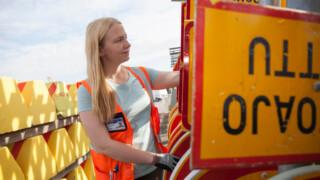
Trade Union JHL reminds that occupational safety and health representatives inform employees about what everyone can do to reduce the strain of working in hot weather.
The sun is shining in a cloudless sky, and the temperature is above +25°C. This may be a dream when you’re on holiday, but if you’re working, it can be a nightmare.
According to Occupational Safety and Health Administration of Finland, the term hot work means working in a space where the ambient air temperature exceeds +28°C. Work in a hot environment is detrimental for the worker’s health and for safe working.
The Finnish Institute of Occupational Health has issued new recommendations for working in hot conditions:
- In temperatures above +30 °C, strenuous work should only be done for up to 30 minutes without a break.
- If strenuous work continues after a break, the working time between breaks shortens, even if the recommended breaks are taken.
- When strenuous work is done in hot temperatures, recovery requires at least a 20-minute break. If the strenuous work continues, breaks need to be longer.
- At room temperature, it usually takes 45–60 minutes for the body to cool down.
The website of the Finnish Institute of Occupational Health provides instructions for employees as well as employers (scroll down the page for instructions in English).
Occupational safety and health representatives help
Working life specialist of Trade Union JHL Tuula Haavasoja reminds that hotness is a major occupational safety and health issue in both indoor and outdoor work.
There will be more hot days because of the climate change, and preparing for them, scheduling proper breaks, and adequate recovery become even more important. Long periods of hot weather are a problem that is not limited to Southern Europe.
“Information on the new recommendations must translate into practice, and that happens through occupational safety and health representatives.”
Haavasoja says that preparing for hot weather needs to be discussed in occupational safety and health cooperation in advance. It is also important to ensure that cooling measures and instructions in the workplace are up to date.
“Occupational safety and health representatives also advise employees about how everyone can reduce the strain of working in hot weather for example with the right kind of clothing and by drinking enough water.”