Trade Union JHL’s survey reveals: Pedagogists and educators still have to pay for their own work clothes − JHL is demanding a change to this
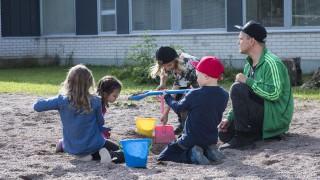
Pedagogy and education professionals have to pay for their own indoor and outdoor work clothes and footwear. The work requires proper gear, which is why the costs can be up to 800 euros a year or more, a survey by the Trade Union for the Public and Welfare Sectors JHL reveals. The union is demanding a change to this.
Clothes and footwear must be suitable for work, both indoors and outdoors. This applies to people who work in day care centres, family day care, youth work, as instructors in morning and afternoon activities or educational institutions, and as assistants. However, Trade Union JHL’s recent survey reveals that employees have to stand for the costs of their own work clothes and footwear frequently. The annual costs can be as high as 800 euros or more. The respondents felt that the largest expense is outdoor clothes and gear.
“The pay is small, and the expenses related to self-paid clothes are large. Clothes sustain more wear and tear than normally. Our work includes being outdoors in all kinds of weather – we need good gear in order to be warm enough.” (day care centre employee)
Altogether, 5,129 people replied to the survey on work clothes targeted to JHL members working in the pedagogy and education sector. Out of those who replied, 57 per cent work in day care centres, 27 per cent in schools or educational institutions, and 15.7 per cent in family day care, youth work, and morning and afternoon clubs. The public sector (municipalities, state or church sector) employs 95 per cent of the respondents.
Employers must stand for the costs of using one’s own clothes and footwear
Out of the pedagogy and education sector professionals who replied, 94 per cent stated that their employer does not pay any work clothes allowance. Neither do the employers pay for the work clothes.
– Imagine a low-income day care centre employee. The employee cannot afford to buy separate clothes and footwear for work. They have to wear them outside the workplace, too. Clothes become worn and torn fast when the employees play with the children on the ground and on the floor. Children also get the carers’ clothes dirty by wiping their noses and hands on them. As a result, clothes sometimes have to be washed every day, JHL’s Specialist in Occupation-specific Activities Sanna Pihakivi states.
– It is unreasonable that the employees must bear the burden of costs related to work clothes, footwear and their maintenance. Employers must either stand for the costs of using one’s own clothes and footwear or acquire the work clothes, JHL President Päivi Niemi-Laine demands.
Only six per cent of the respondents reported that they had claimed work clothing purchases as tax deductions, but in 95 per cent of the cases, the Finnish Tax Administration had not approved the deduction. Many of those who replied hope that there will be a change to this in taxation.
Inequality is widely present in practices related to work clothes
In all occupational groups, the open-ended replies of the survey highlighted the unequal treatment of employees in terms of work clothes and footwear. The respondents reported of inequality – not only between sectors, but also between units.
“It’s interesting how we who work within early childhood education and care must acquire all our work clothes independently, when the work consists of spending time outside around the year in all kinds of weather. The rest of the city employees have, say, outdoor clothes if the work requires it.” (day care centre employee)
“In some units, shoes and clothing suitable for outreach purposes have been bought for all employees, whereas nothing has been bought for us (during the coronavirus). Thus, it depends on unit budgets, but it’s fairly unequal.” (youth worker)
Trade Union JHL is in the municipal collective agreement’s working group. The group’s duty is to evaluate the needs for change concerning expense reimbursements and protective clothing, and to make amendment suggestions. JHL is striving for a more equal and extensive improvement to current practices. Also in the private social services sector’s collective agreement which applies to, say, early childhood education and care, a working group has been appointed for the ongoing agreement period. The working group deals with matters related to protective clothing and work clothing.
The union reminds that, according to the Occupational Safety and Health Act, one must in connection to risk assessment also look into the selection and use of personal protective equipment in the workplace along with assessing usage needs concerning protective clothes and workwear.
More information:
President Päivi Niemi-Laine, 040 702 4772
Specialist in Occupation-specific Activities Sanna Pihakivi, 050 439 7541