Collective agreements

A collective agreement (in Finnish “työehtosopimus”, or “tes”) is an agreement on the terms and conditions of employment for your sector. For example your pay and holidays are determined by your collective agreement. Negotiating on collective agreements and improving your terms and conditions of employment are among JHL’s most important duties.

Without collective agreements negotiated by trade unions, we could have longer working weeks, lower pay and no holidays.

Being a trade union member gives you a stronger position in working life and shows that you want proper terms and conditions of employment. Only trade union membership secures a fair working life for you – now and in the future.

A collective agreement (in Finnish työehtosopimus, or tes) is an agreement on the terms and conditions of employment for your sector. Collective agreements secure for example better pay and holidays than the law. Collective agreements of employees in a public service employment relationship are called in Finnish virkaehtosopimus, or ves. JHL negotiates your collective agreement with the representative of your employer. We represent you in the collective agreement negotiations. 

Collective agreements determine the most important terms and conditions of employment, such as for example pay, working times, holidays and sick leave pay.

Without collective agreements negotiated by trade unions, we could have longer working weeks, lower pay and no holidays. Trade Union JHL seeks to continuously improve the position of employees in our society. 

Collective agreements cover pay increases, evening, night and shift work bonuses, midweek holiday compensations, paid leave if a child gets ill, paid family leaves, holiday bonus, working time bonuses and other bonuses, minimum working hours, minimum pay, and coffee breaks.

The representatives of the employees and the employer work together on the collective agreement. When your collective agreement is made, Trade Union JHL represents the employees. The agreement party on the employer side can be an employer association or the employer itself.

A collective agreement is the result of collective agreement negotiations (often called collective bargaining), where trade unions and the employer party negotiate on the terms and conditions of employment. Collective agreements are negotiated at intervals of about two or a few years, depending on the agreement. In the negotiations the parties discuss updates to your terms and conditions of employment and agree for example on pay increases. Across-the-board pay increases do not come from the law, they come to your pay from the collective agreement, as a result of the negotiations. 

A collective agreement determines the general terms and conditions and practices of working that concern all employees. A collective agreement secures better terms and conditions of employment than the law.

An employment contract is made individually with every employee before the beginning of their employment. An employment contract specifies for example the duration of the employment, work duties, working time and pay. Many points in the employment contract can refer to the collective agreement, for example like this: “pay in accordance with the collective agreement.” The terms and conditions of employment that are entered into the employment contract must be at least as good for the employee as the terms and conditions in the collective agreement. The employee and the employer can also agree in the employment contract on better terms and conditions of employment than those in the collective agreement.

Read more about the agreements in working life on SAK’s website

Your collective agreement forms the framework of the terms and conditions of employment and employee benefits in your sector. It determines for example your pay, working time and holidays.

The collective agreement may also contain other terms and conditions that are typical and needed for that particular sector and make planning and doing the work more flexible. Such flexibility usually comes with a compensation, such as an evening and night work bonus.

Negotiating on collective agreements and improving your terms and conditions of employment are among Trade Union JHL’s most important duties. 

A collective agreement is important because it determines the pay for the work. It is also needed because it helps to improve wellbeing at work and employees’ rights.

If there were no collective agreements, we could have longer working weeks and much lower pay. Trade Union JHL works to secure consistent and fair terms and conditions of employment for its members through the collective agreements that we negotiate.

Here is a selection of the collective agreements negotiated by JHL. For all the agreements, see this page in Finnish or Swedish.


Airpro

The agreement period of Airpro’s collective agreement covers three years (2+1), from 1 April 2025 to 31 March 2028.

  • 1 August 2025: 2.44% across-the-board increase
  • 1 July 2026: 2.9% across-the-board increase. In the first place, this increase allowance is intended to be used for the work of a pay working group or a work shift working group. If there is no agreement by 31 March 2026 on how it should be allocated, the amount will be paid as an across-the board increase.
  • 1 July 2027: 2.4% increase. The pay increase money of the year 2027 is intended to be used in the first place for locally agreed pay increases. The employer can decide how the allowance for locally agreed pay increases is allocated. If pay increases cannot be agreed locally, the 2.4% allowance will be paid as an across-the-board increase.

News about the collective agreement

Go to the news article: Read about the new collective agreement for Airpro


Company sector of Local Government and County Employers KT

The agreement period of the collective agreements of KT’s member companies is 1 May 2025−29 February 2028.

The principal negotiating organisations Public Sector Union JAU (JHL and Jyty), the Negotiation Organisation for Public Sector Professionals JUKO, the health and social services sector’s negotiation organisation Sote ry and Local Government and County Employers KT have agreed on a collective agreement that at the first step determines which collective agreements are followed in the member companies of KT’s company sector.

On the employer side, the company sector agreements are managed by KT’s company division.

  • 1 October 2025: EUR 53 across-the-board increase, at least 2.50%
  • 1 August 2026: 2.27% across-the-board increase
  • 1 October 2026: two increases: 0.2% local adjustment allowance (“paikallinen järjestelyerä” in Finnish), and 0.3% development allowance for locally agreed pay programme pay increases (“paikallinen kehittämiserä”)
  • 1 April 2027: three increases: 2.0% across-the-board increase, 0.37% local adjustment allowance, and 0.3% development allowance for locally agreed pay programme pay increases

Companies owned by municipalities or wellbeing services counties can become members of the company division of Local Government and County Employers KT.

The company’s main line of business determines which one of the agreements that are applicable to the company sector it follows.

When the member company’s main line of business is service companies:

  • The company follows the general collective agreement for KT’s company sector (YTES).

When the member company’s main line of business is social welfare and health care services:
The company follows the applicable collective agreements for wellbeing services counties. The collective agreements are:

  • The general collective agreement for wellbeing services counties (HYVTES)
  • The collective agreement for health and social services personnel (SOTE agreement)
  • The collective agreement for physicians (LS)

When the member company’s main line of business is education:
The company follows

  • The collective agreement for education sector in KT’s company sector (OTES) for the general terms and conditions of employment.
  • For non-teaching staff, the company follows the YTES agreement in all terms and conditions.

When the member company’s main line of business is staff leasing:

  • The companies follow the collective agreement for staff leasing sector in KT’s company sector (vuokra-TES).

Energy sector

Electrical Engineering – Energy-ICT-Network Collective Agreement

The agreement period of the collective agreement for energy sector employees (Electrical engineering – Energy-ICT-Network) is 1 April 2025–31 March 2028.

Pay increases in 2025

On 1 August 2025, the employees get pay increases that consist of a 2.1% across-the-board increase and a 0.4% company-specific item, unless a different local agreement is concluded by 18 July 2025.

Pay increases in 2026

On 1 July 2026, the employees get pay increases that consist of a 2.3% across-the-board increase and a 0.6% company-specific item, unless a different local agreement is concluded by 12 June 2026.

Pay increases in 2027

On 1 July 2027, the employees get pay increases that consist of a 2.0% across-the-board increase and a 0.4% company-specific item, unless a different local agreement is concluded by 18 June 2027.

News about the collective agreement

Go to the news article: New collective agreement for the energy sector – 7.8% pay increases in three years

The Collective Agreement for Salaried Employees in the Energy Industries

The agreement period of the Collective Agreement for Salaried Employees in the Energy Industries is 1 March 2025–29 February 2028. JHL joins this collective agreement with an accession protocol.

A local pay settlement is agreed upon with the employees’ shop steward. The local pay settlement must be agreed upon in writing by 13 June 2025 for the year 2025, by 15 May 2026 for the year 2026, and by 14 May 2027 for the year 2027, unless otherwise agreed upon regarding the processing time. The method, timing, and amount of increases can be agreed in the local pay settlement.

If a local agreement is not achieved, pay increases will be as follows:

  • 1 July 2025: 2.0% across-the-board increase, 0.5% company-specific item
  • 1 June 2026: 2.2% across-the-board increase, 0.7% company-specific item
  • 1 June 2027: 2.0% across-the-board increase, 0.4% company-specific item

If not agreed differently in a local agreement, minimum salaries of the agreements will increase as follows:

  • 2025: minimum salaries increase by 2.5%
  • 2026: minimum salaries increase by 2.9%
  • 2027: minimum salaries increase by 2.0%.

Finavia

The collective agreement for Finavia is part of the Palta collective agreement for special sectors. This means that the agreement period and pay rises come from the collective agreement for Palta special sectors. Finavia’s agreement period is 2+1 years, from 1 March 2025 to 29 February 2028. The agreement can be terminated after two years, in which case it ends on 28 February 2027.

Pay increases are agreed locally, as specified in the Palta collective labour agreement for special sectors. If local agreement is not achieved in due time, pay increases are paid as follows:

  • 1 July 2025: 2.1% across-the-board increase, plus 0.4% company-specific allowance, from which 0.05% is allocated to implementing changes in the agreement text
  • 1 June 2026: 2.3% across-the-board increase, from which 0.05% is allocated to implementing changes in the agreement text, plus 0.6% company-specific allowance
  • 1 June 2027: 2.0% across-the-board increase, 0.4% company-specific allowance

News about the collective agreement

Go to the news article: New collective agreement for Finavia: pay rises in three steps, the co-operation committee will work on environmental matters


General collective agreement for the municipal sector (KVTES)

The agreement period of the general collective agreement for the municipal sector (KVTES) is 1 May 2025–29 February 2028.

  • 1 October 2025: EUR 53 across-the-board increase, at least 2.50%
  • 1 August 2026: 2.27% across-the-board increase
  • 1 October 2026: two increases: 0.2% local adjustment allowance (“paikallinen järjestelyerä” in Finnish), and 0.4% development allowance for locally agreed pay programme pay increases (“paikallinen kehittämiserä”)
  • 1 April 2027: three increases: 2.0% across-the-board increase, 0.4% local adjustment allowance, and 0.4% development allowance for locally agreed pay programme pay increases
  • 1 February 2028: 1.0% development allowance for pay programme pay increases

News about the collective agreement

Go to the news article: The new KVTES collective agreement: general-level pay increases plus continuation of the pay programme


General collective agreement for the welfare sector (HYVTES)

The agreement period of the general collective agreement for the welfare sector (HYVTES) is 1 May 2025–29 February 2028.

  • 1 October 2025: a €53 across-the-board increase, at least 2.50%
  • 1 August 2026: a 2.27% across-the-board increase
  • 1 October 2026: two increases: 0.2% local adjustment allowance (“paikallinen järjestelyerä” in Finnish), and 0.4% development allowance for locally agreed pay programme pay increases (“paikallinen kehittämiserä”)
  • 1 April 2027: three increases: 2.0% across-the-board increase, 0.4% local adjustment allowance, and 0.4% development allowance for locally agreed pay programme pay increases
  • 1 February 2028: a 1.0% development allowance for pay programme pay increases

News about the collective agreement

Go to the news article: The new HYVTES collective agreement: general-level pay increases plus continuation of the pay programme


Hourly paid personnel in the municipal sector (TTES)

The agreement period of the collective agreement for hourly paid personnel in the municipal sector (TTES) is 1 May 2025–29 February 2028.

  • 1 October 2025: EUR 0.37/hour across-the-board increase, at least 2.50%
  • 1 August 2026: 2.27% across-the-board increase
  • 1 October 2026: two increases: 0.2% local adjustment allowance (“paikallinen järjestelyerä” in Finnish), and 0.4% development allowance for locally agreed pay programme pay increases (“paikallinen kehittämiserä”)
  • 1 April 2027: three increases: 2.0% across-the-board increase, 0.4% local adjustment allowance, and 0.4% development allowance for locally agreed pay programme pay increases
  • 1 February 2028: 1.0% development allowance for pay programme pay increases

News about the collective agreement

Go to the news article: The new collective agreement for hourly paid personnel in the municipal sector in 2025–2028

Preparations for a reform of technical sector agreements have started

Municipalities may get a new collective agreement for the technical sector. Currently, two or even three different collective agreements are applied to technical sector work. The two agreements for this sector are the collective agreement for hourly paid personnel in the municipal sector (TTES) and the collective agreement for technical personnel in the municipal sector (TS).

Read about the preparations of a new collective agreement.


Palta collective labour agreement for special sectors (EPA-TES)

The agreement period of the Palta collective labour agreement for special sectors is 13 March 2025–29 February 2028. The agreement can be terminated on 28 February 2027 by delivering a notice of termination by 31 December 2026.

In the first place, pay increases are agreed locally.

If local negotiations do not procude an agreement on pay increases in due time, pay increases will be as follows:

  • 1 July 2025: 2.1% across-the-board increase, 0.4% company-specific allowance
  • 1 June 2026: 2.3% across-the-board increase, 0.6% company-specific allowance
  • 1 June 2027: 2.0% across-the-board increase, 0.4% company-specific allowance

The following collective agreements are linked to EPA-TES:

  • Collective agreement for Actia Meritaito
  • Collective agreement for Finavia
  • Collective agreement for the pilotage sector
  • Collective agreement for Metsähallitus
  • Collective agreement for Raskone
  • Collective agreement for Senate Group

Personal assistants (HetaTES)

The agreement period of the national collective agreement for personal assistants (HetaTES) is 1 May 2025–30 April 2028.

This collective agreement concerns the employer model for personal assistance. It covers the employment relationships of those personal assistants whose employer is a member of the Union of the Employers of Personal Assistants in Finland. 

Pay increases in 2025

Increase of pay scale wages on 1 July 2025:

  • Pay group A: €0.38 
  • Pay groups B1, B2 and C: €0.34 

Changes to pay groups on 1 July 2025: 

  • Clarifications to pay group B2 concerning independent dispensation of medications and to pay group C concerning work duties related to demanding communication.
  • Use of a cough assist machine has been added to the set of duties related to assistance in ensuring the functioning of the respiratory tract in pay group B2.

Experience increments get divided into three steps on 1 July 2025:   

  • After one year of work the employee gets an experience increment of 1.25%.
  • After five years of work the employee gets an experience increment of 1.7%.
  • After 11 years of work the employee gets an experience increment of 2%.

Note! Update to overtime pay in general working time on 1 May 2025:

  • Overtime work is compensated regardless of whether it arises from exceeding the maximum working time per day, per week or per adjustment period.
  • The wage is increase by 50% for the first three overtime hours. For the subsequent overtime hours, the wage is increased by 100%.

Pay increases in 2026

Increase of pay scale wages on 1 July 2026:

  • €0.34 in all pay groups 

Note! Compensation for night work in period-based work on 1 January 2026:

  • The compensation for night work in period-based work rises from 30% to 40%.

Pay increases in 2027

Increase of pay scale wages on 1 July 2027:

  • €0.33 in all pay groups 

News about the collective agreement

Go to the news article: The new collective agreement for personal assistants improves terms and conditions of employment in many ways


Private health services sector

The agreement period of the collective agreement for the private health services sector is 1 May 2024–30 April 2026.

News about the collective agreement

Go to the news article: The negotiation result for the private health services sector has been approved – read about the new collective agreement


Private social services sector

The agreement period of the collective agreement for the private social services sector is 1 May 2023–31 December 2025.


Private teaching sector

The agreement period of the collective agreement for administration and support service personnel in the private teaching sector is 23 May 2024–31 March 2026.

News about the collective agreement

Go to the news article: JHL’s Executive Committee approved the negotiation results for the private teaching sector and adult education centres


Railway sector

The agreement period of the collective agreement for the railway sector is 1 April 2025–31 March 2028.

News about the collective agreement

Go to the news article: 7.8% pay increases for the railway sector


Social welfare and health care personnel (SOTE agreement)

The agreement period of the collective agreement for social welfare and health care personnel (SOTE agreement) is 1 May 2025–29 February 2028.

Pay increases in 2025

  •  1 October 2025: EUR 53 across-the-board increase, at least 2.5%

Pay increases in 2026

  • 1 August 2026: 2.27% across-the-board increase
  • 1 October 2026: 0.2% local adjustment allowance (“paikallinen järjestelyerä” in Finnish)
  • 1 October 2026: 0.4% allowance for locally agreed development programme pay increases

Pay increases in 2027

  • 1 April 2027: 2.0% across-the-board increase
  • 1 April 2027: 0.4% local adjustment allowance
  • 1 April 2027: 0.4% allowance for locally agreed development programme pay increases

Pay increases in 2028

  • 1 February 2028: 1.0% allowance for locally agreed development programme pay increases

News about the collective agreement

Go to the news article: The new SOTE agreement: general-level pay increases plus continuation of the pay programme


Technical personnel in the municipal sector (TS)

The agreement period of the collective agreement for technical personnel in the municipal sector (TS) is 1 May 2025–29 February 2028.

  • 1 October 2025: EUR 53 across-the-board increase, at least 2.50%
  • 1 August 2026: 2.27% across-the-board increase
  • 1 October 2026: two increases: 0.2% local adjustment allowance (“paikallinen järjestelyerä” in Finnish), and 0.4% development allowance for locally agreed pay programme pay increases (“paikallinen kehittämiserä”)
  • 1 April 2027: three increases: 2.0% across-the-board increase, 0.4% local adjustment allowance, and 0.4% development allowance for locally agreed pay programme pay increases
  • 1 February 2028: 1.0% development allowance for pay programme pay increases

News about the collective agreement

Go to the news article: The new collective agreement for technical personnel in the municipal sector in 2025–2028

Municipalities may get a new collective agreement for the technical sector

Municipalities may get a new collective agreement for the technical sector. Agreeing on the preparation of this agreement was part of the collective agreement solution of the municipal and welfare sector.

Currently, two or even three different collective agreements are applied to technical sector work. The two agreements for this sector are the collective agreement for hourly paid personnel in the municipal sector (TTES) and the collective agreement for technical personnel in the municipal sector (TS).


Universities

The agreement period of the general collective agreement for universities is 21 May 2025–31 March 2028.

  • 1 July 2025: 2.5% general increase
  • 1 June 2026: 2.2% general increase
  • 1 June 2027: 2.0% general increase
  • 1 December 2026: 0.3% university-specific increase
  • 1 December 2027: 0.4% university-specific increase
  • 1 January 2027: 0.4% local arrangement increase. This amount will be used for developing the remuneration system as agreed by the parties.

Euro-denominated salaries (other than YPJ university remuneration system salaries) and Academy of Finland-funded academy professors’ and researchers’ euro-denominated salaries will be raised as follows: from 1 Aug. 2025 by 2.5%, from 1 Jul. 2026 by 2.9%, and from 1 Jul. 2027 by 2.4%.


Vocational adult education centres

The agreement period of the collective agreement for the administration and support service personnel in vocational adult education centres is 23 May 2024–31 March 2026.

These pay increases apply to the administration and support service personnel in vocational adult education centres.

  • 1 June 2024: 2.5 % across-the-board increase, 0.4% local increase allowance
  • 1 August 2025: 1.75 % across-the-board increase, 0.75% local increase allowance

News about the collective agreement

Go to the news article: JHL’s Executive Committee approved the negotiation results for the private teaching sector and adult education centres


Collective agreement negotiation news

Join JHL!

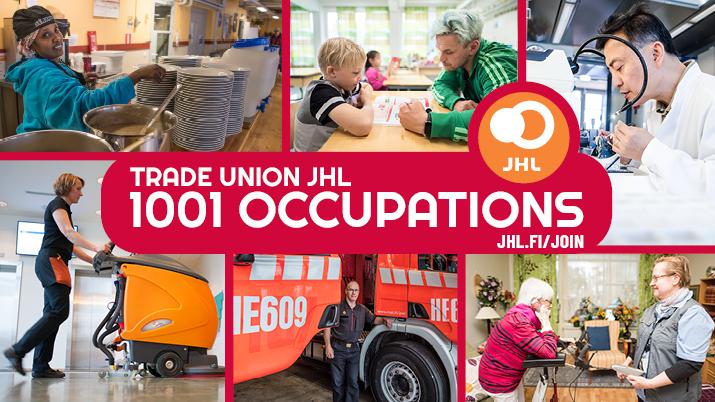
JHL is the most diverse trade union in Finland. Our members work in about one thousand different occupations in welfare and public services. You can be for example a social welfare or health care professional, a youth worker or an early childhood education and care expert, a cleaner, a cook, a secretary, a security guard or a train conductor, and we are your trade union!

Secure your terms and conditions of employment, join JHL!